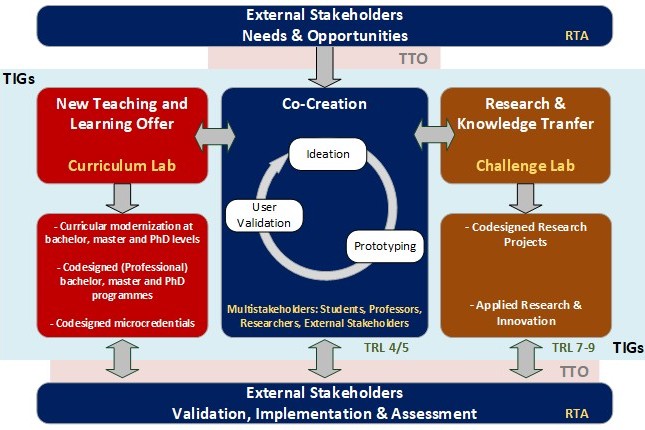
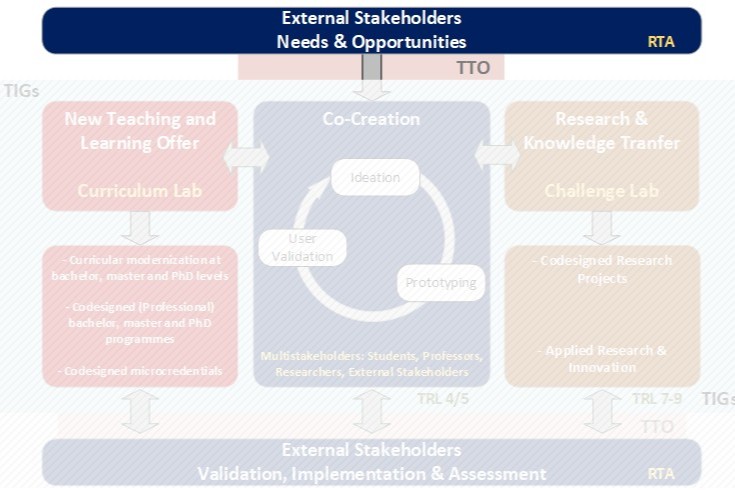
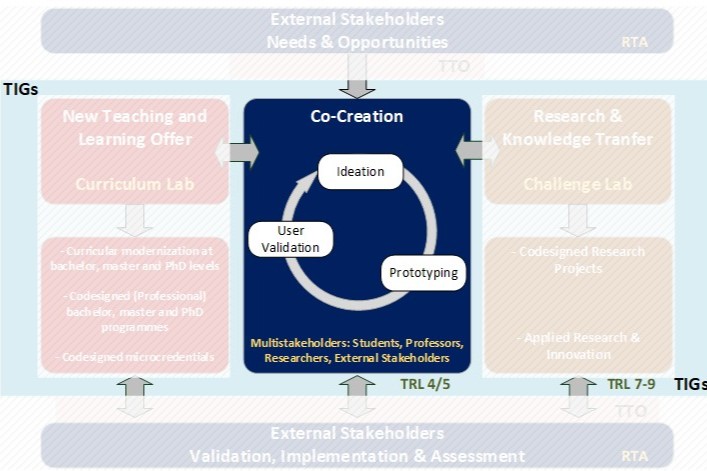
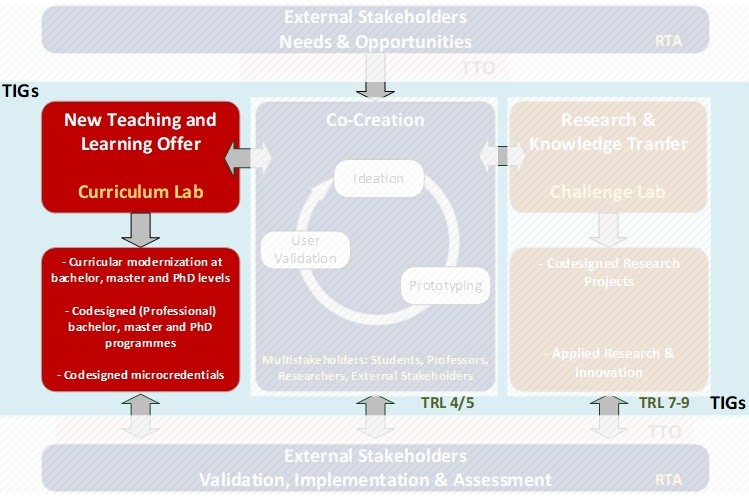
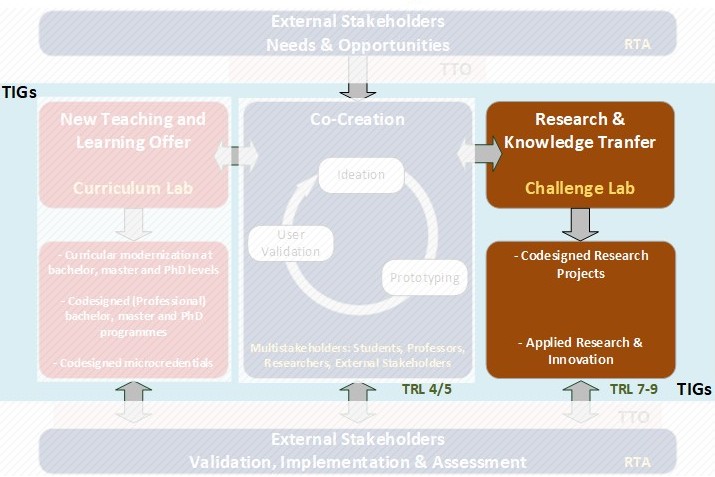
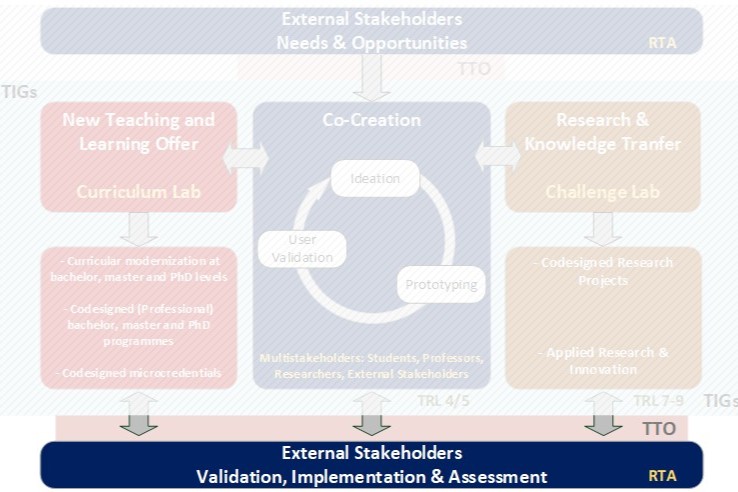
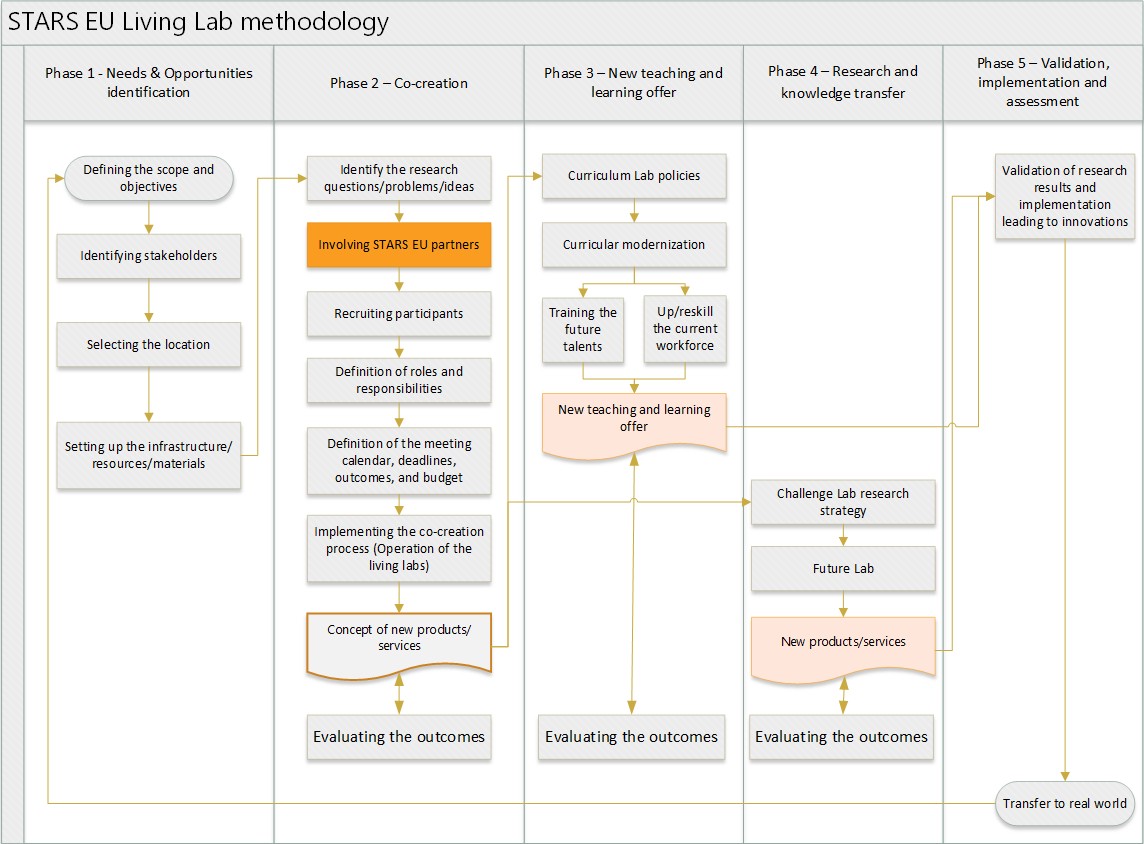
A living lab is a collaborative platform where stakeholders from various sectors such as industry, academia, research, ONG, government, and civil society come together to identify needs and opportunities for territorial and inter-territorial cooperation, including academia and industry cooperation, and further on to co-create and test innovative solutions in a real-world setting.
By providing a dynamic environment for experimentation and iteration, living labs facilitate the development of user-centered innovations that address complex societal challenges. These platforms foster open innovation, promote interdisciplinary collaboration, and support integrating new technologies and practices into everyday life.
Through co-design, experimentation, and evaluation, living labs enable stakeholders to gain valuable insights, refine their offerings, and accelerate the transition towards more sustainable and inclusive societies.
Find Out MoreUnderstanding societal and industrial challenges to guide research and education.
Fostering cooperation between academia, industry, government, and society.
Driving regional and interregional growth through sustainability-focused initiatives.
Supporting entrepreneurship and economic growth by transferring knowledge and innovation.
Modernizing curricula and skill development for lifelong learning and employability.
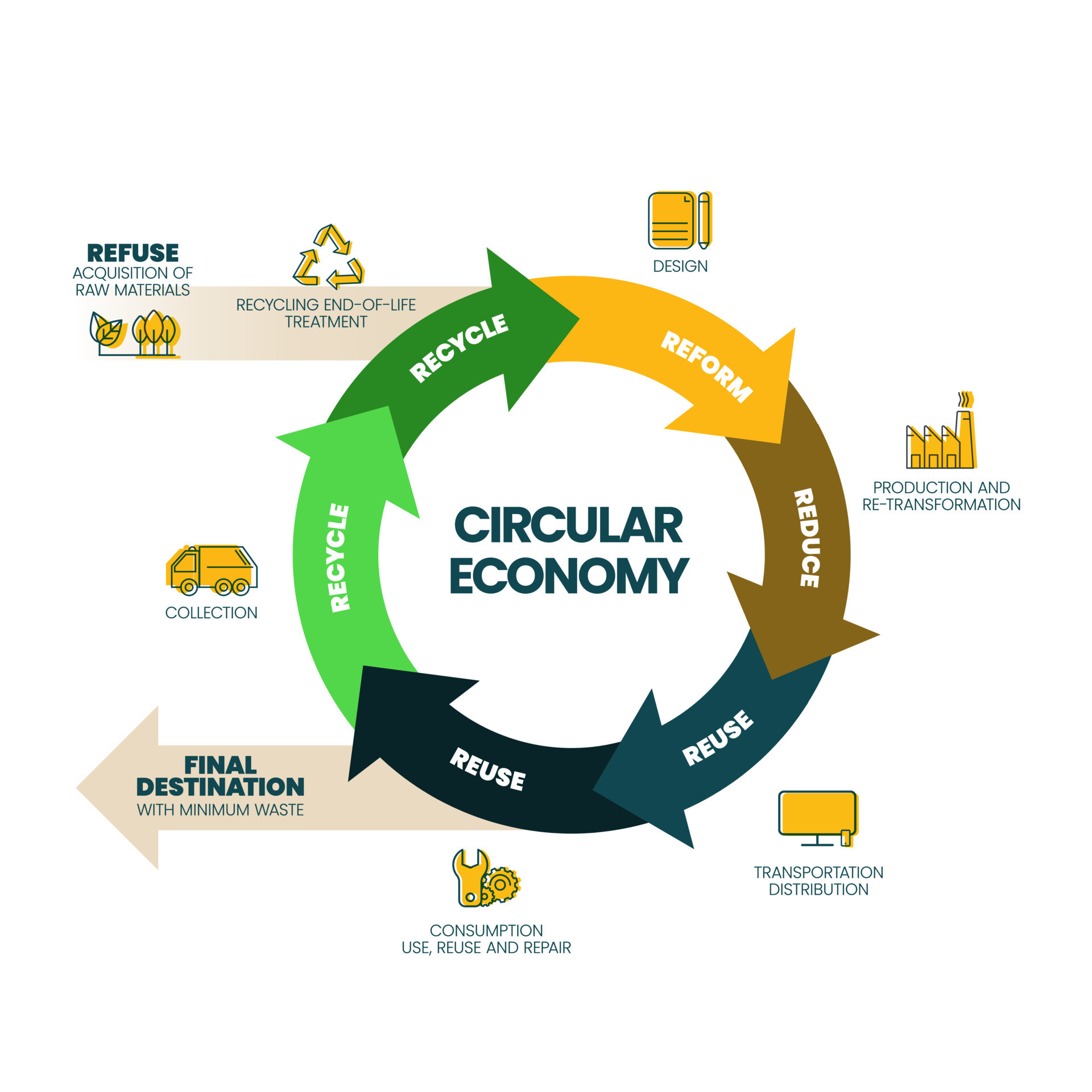
Focuses on designing out waste and pollution, keeping products and materials in use, and regenerating natural systems. This approach aims to create a closed-loop system, minimizing resource input and environmental impact.

Aims to shift from fossil-based energy systems to renewable energy sources like wind, solar, and hydroelectric power. This transition seeks to reduce carbon emissions and combat climate change.

Involves integrating digital technologies into all areas of society, fundamentally changing how we operate and deliver value. It encompasses adopting innovations like artificial intelligence, big data, and the Internet of Things to improve efficiency and service quality

Encompasses sectors that focus on the creation and distribution of creative goods and services, including visual arts, music, film, design, and cultural heritage. These industries drive innovation, cultural diversity, and economic growth.

Promotes the well-being of older adults by focusing on preventive care, active lifestyles, and supportive environments. The goal is to enhance quality of life and independence as people age.

Encourages the development of new businesses and innovative solutions to address societal challenges. This area supports startups, fosters a culture of creativity, and drives economic development.

Focuses on designing and enhancing physical environments where people live and interact. This includes urban planning, sustainable architecture, and creating inclusive public spaces that improve the quality of life.
Due to current rapid social and technological changes, the importance of lifelong learning and acquiring of new and diverse knowledge, skills, and competences becomes paramount to keep pace with the job market demands. Micro-credentials emerge as a solution to meet this demand, offering a pathway for individuals to enhance their skills and stay relevant in evolving times. Micro-credentials offer a flexible and modern approach to education and training, providing learners with specific skills, knowledge, and competencies tailored to current market needs. They are becoming increasingly significant in the upskilling and reskilling of lifelong learners, educators, as well as industry professionals.
Micro-credentials reflect the European commitment to inclusive and accessible education for all, facilitating the recognition of skills and qualifications across Europe and supporting mobility and lifelong learning." The STARS EU ALLIANCE is therefore committed to explore the role of micro-credentials in providing learning opportunities to diverse learners, particularly by expanding an attractive, accessible, inclusive, and learner-centered offer of lifelong learning activities.
Many micro-credentials shall be offered jointly, strengthening networking and enhancing the expertise of the Alliance members. A catalog of potential STARS EU micro-credentials is currently being developed. The relevance, development, and continuous improvement of micro-credentials will stem out of the cooperation and collaboration among regional and national authorities, STARS EU ALLIANCE, and sectoral and cross-industry social dialogues. This way, the STARS EU ALLIANCE micro-credential offer will remain up-to-date, targeted, and relevant.
Catalog STARS EU microcredentials